Ice Bath After a Workout: Does It Help Recovery or Hurt Muscle Growth?

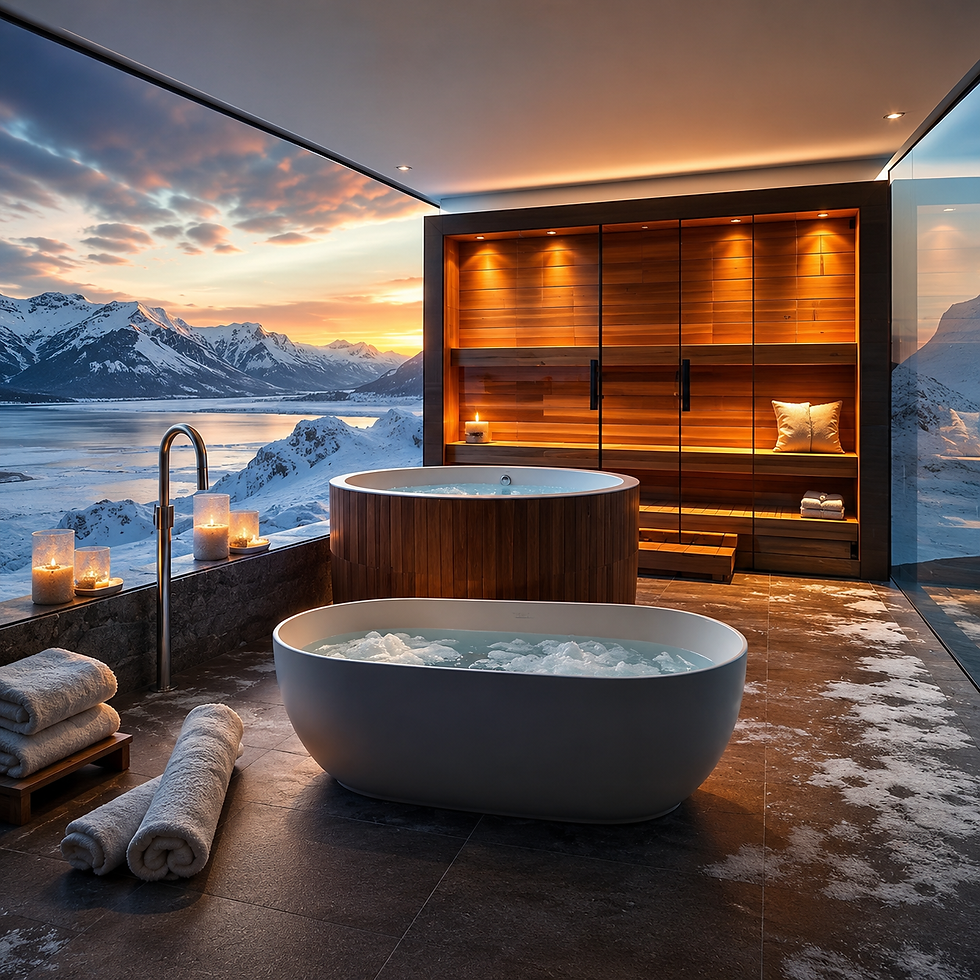
If you've spent any time on social media, you've probably seen athletes and fitness influencers sitting in freezing cold tubs after a workout. Ice baths have become one of the biggest recovery trends in the fitness world. Some people swear by them for faster recovery, while others claim they boost testosterone, burn fat, and even build mental toughness.
But should you be taking an ice bath after every workout?
The short answer is: it depends on your goal.
If your main objective is building muscle and getting stronger, the answer may surprise you.
What Is an Ice Bath?
An ice bath, also known as cold water immersion, involves sitting in cold water, usually between 10 and 15°C, for around 1-10 minutes.
The cold temperature causes your blood vessels to constrict, reduces inflammation, and decreases the sensation of muscle soreness. This is why many people step out of an ice bath feeling refreshed and recovered.
But recovery is more complicated than simply reducing soreness.
Does an Ice Bath Help Muscle Recovery?
Yes... but only in certain situations.
Research consistently shows that ice baths can reduce muscle soreness after intense exercise. If you've ever struggled to walk after a brutal leg day, you've probably wished for a quick fix.
Cold water immersion can help you feel better during the following 24 to 48 hours by reducing discomfort and fatigue.
However, there's an important distinction many people overlook.
Feeling recovered isn't the same as improving recovery adaptations.
Your body needs a certain amount of inflammation after resistance training to repair damaged muscle fibres and stimulate muscle growth.
When you immediately reduce that response after every workout, you may also reduce some of the signals responsible for building bigger and stronger muscles.
Do Ice Baths Reduce Muscle Growth?
For people focused on hypertrophy or increasing strength, this is the most important question.
Current research suggests that regular ice baths immediately after strength training may slightly reduce long term muscle growth and strength gains.
Why?
Because lifting weights creates microscopic muscle damage. Your body responds with inflammation, protein synthesis, and muscle repair. Those processes are exactly what make your muscles adapt.
Frequent cold water immersion appears to dampen some of those adaptation signals.
Does this mean one ice bath ruins your progress?
Absolutely not.
But if you're lifting weights four or five times every week and finishing every session with an ice bath, you may be sacrificing a small amount of long term progress for short term comfort.
Are Ice Baths Good for Recovery?
Absolutely.
They simply work best in specific situations.
An ice bath can be an excellent recovery strategy if you:
Have another training session later that day.
Are competing in a tournament with multiple matches.
Need to recover quickly before another event.
Want to reduce muscle soreness after an unusually demanding workout.
Are exercising in very hot conditions and need to lower your body temperature.
This is exactly why many professional athletes use cold water immersion.
Their goal is often to perform again tomorrow, not necessarily to maximise muscle growth over the next six months.
Sauna Followed by an Ice Bath: Is It a Good Idea?
Many gyms now offer both saunas and ice baths, making the combination increasingly popular.
The contrast feels incredible.
The sauna promotes relaxation, increases circulation, and can help reduce stress after training.
Jumping into an ice bath afterwards feels refreshing and energising.
From a muscle building perspective, however, it's still the ice bath that deserves attention.
Current evidence doesn't suggest that sauna use negatively affects muscle growth in the same way immediate cold exposure might.
So if your goal is building muscle, Workout → Sauna is generally a better option than Workout → Sauna → Ice Bath after every lifting session.
Do Ice Baths Increase Testosterone?
One of the biggest myths surrounding cold exposure is that it dramatically boosts testosterone.
Unfortunately, the science doesn't support this claim.
Some studies show temporary increases in hormones involved in the body's stress response, such as norepinephrine.
However, there is no convincing evidence that regular ice baths significantly increase testosterone levels or lead to greater muscle growth.
If your goal is naturally supporting healthy testosterone, focus on habits that actually make a difference:
Strength training consistently.
Sleeping seven to nine hours every night.
Eating enough calories and protein.
Maintaining a healthy body weight.
Managing chronic stress.
These lifestyle factors have a much greater impact than spending five minutes in freezing water.
Should You Take an Ice Bath Before a Workout?
This is another common question.
For most people, the answer is no.
Cold exposure before lifting weights can temporarily lower muscle temperature, reduce power output, and make your muscles feel stiffer until you've warmed up again.
If your goal is performing your best in the gym, you're generally better off arriving warm and ready to train.
Should You Take an Ice Bath After Every Workout?
For most people trying to build muscle, probably not.
Instead, prioritise the recovery methods that have the biggest impact:
Progressive overload in your training.
Eating enough protein.
Sleeping consistently.
Managing stress.
Staying hydrated.
These habits will contribute far more to your long term results than daily ice baths ever will.
Ice baths are a useful tool, but they're not a shortcut.
Final Verdict: Are Ice Baths Worth It?
Ice baths aren't useless.
They're also not the miracle recovery tool that social media often makes them out to be.
If your priority is rapid recovery, reducing soreness, or preparing for another competition, an ice bath can absolutely be worthwhile.
If your priority is building muscle and increasing strength, frequent ice baths immediately after resistance training probably aren't your best strategy.
The fundamentals still matter most.
Train hard. Eat well. Sleep enough. Stay consistent.
Because no recovery hack will ever outperform months and years of quality training.
Frequently Asked Questionsice bath before/after workout
Do ice baths help muscle recovery?
Yes. Ice baths can reduce muscle soreness and help you recover between training sessions, especially when you need to perform again within 24 hours.
Do ice baths reduce muscle growth?
Regular ice baths immediately after strength training may slightly reduce long term muscle growth by dampening some of the body's natural adaptation signals.
Does an ice bath increase testosterone?
Current research does not show that regular ice baths significantly increase testosterone or improve muscle building.
Is sauna better than an ice bath after lifting weights?
If your goal is muscle growth, a sauna is generally a better option immediately after training because current evidence does not suggest it blunts muscle building adaptations like immediate cold exposure may.
Should beginners use ice baths?
Beginners certainly can, but they don't need to. Building a consistent training routine, eating enough protein, and sleeping well will have a much greater impact on results than adding regular ice baths.
Comments